

How To Build A Digital Camera
Are you sometimes annoyed by having too many easy and convenient means to accept perfect photos? Don't despair…
There are then many interesting hobbyist cameras around — 3D printed with plastic, cut from wood or paper, basically everything y'all could imagine. But nearly all of them are analog. Why? Because digital sensors are a hurting in the butt.
Of course, there are other reasons besides, big picture show planes allow building cameras that tolerate slightly larger deviations in precision during manufacturing, etc., but the two chief reasons (I reckon) are: why compete with digital if yous've got an excellent digital camera in your smartphone and the fact that digital sensors but are a pain.
Anyhow, I built one (or two):
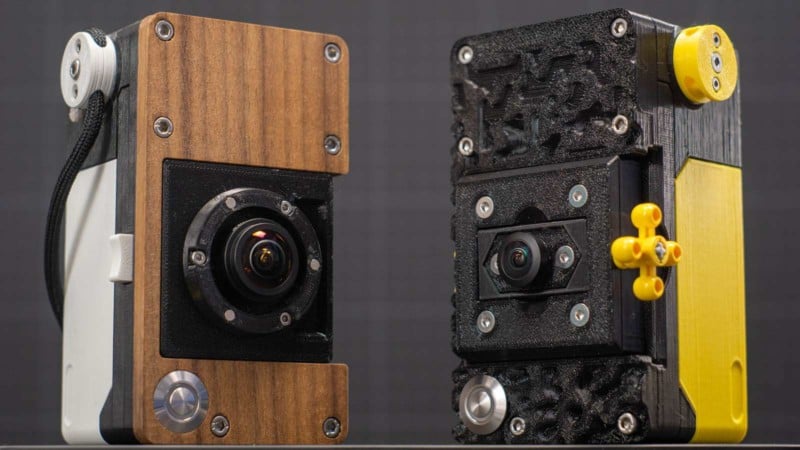
The thing is, digital cameras are pretty boring. Where is all the quirkiness gone? Lens movements similar tilt/shift/rise/autumn? Weird and cheap lenses? Square attribute ratios? Panorama cameras? Memory cards that over-expose all images when y'all open up them before they are full? All gone!
So, I made cameras. With sh**ty sensors and weird lenses. The sensors are actually small and so I tin use really inexpensive drinking glass. The lenses are mostly M12, that's stuff for surveillance cameras and related applications.
Does information technology have autofocus? No.
Does it have transmission controls? No.
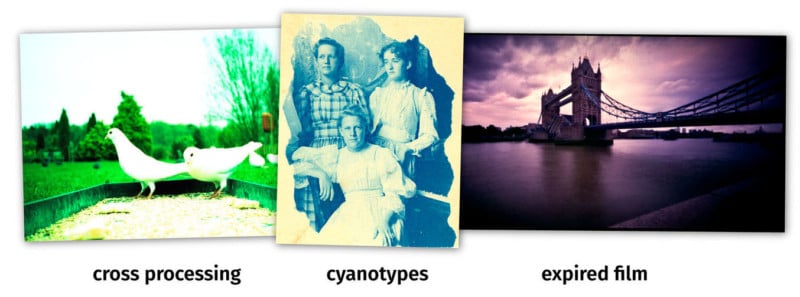
Techniques that can exist considered lomographic
Maybe you know lomography. Buying old and sh**ty or new and overpriced cameras, grabbing some expired film, and having a lot of fun with stuff that merely e'er surprises you lot? Well, I practise from time to time, only sometimes I would actually like to have a digital lomography camera. Something with sh**ty lenses and a lot of weird stuff. Something that'south not exactly my mobile phone.
So, tin can I buy one? Can I build ane? Let'southward build one. The skilful thing here is that a lot of complex electronics stuff has become really attainable and easy to use. That's the only reason why I am able to do these things every bit a software person. But the 1 thing that'southward still a pain? Prototype sensors… You basically have to sign NDAs, order in bulk, sell your soul and still need to write your ain drivers on tiptop of that.
The just way to get admission to whatsoever decent image sensor at all is to use the Raspberry Pi ecosystem.
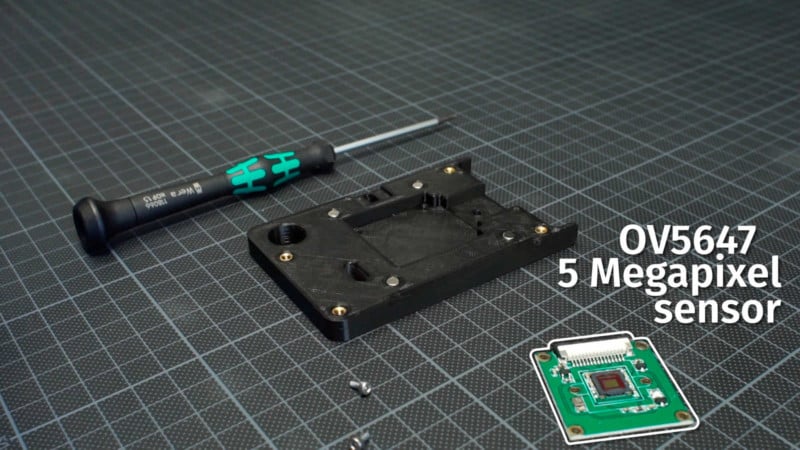
So, what I am using here is the OV5647, a tiny $ten sensor, (besides known as the Raspberry Pi Camera V1 chip). That's 3.6×2.7 millimeters with a whopping five megapixels! The large advantage of such a small sensor is that I can use M12 lenses.
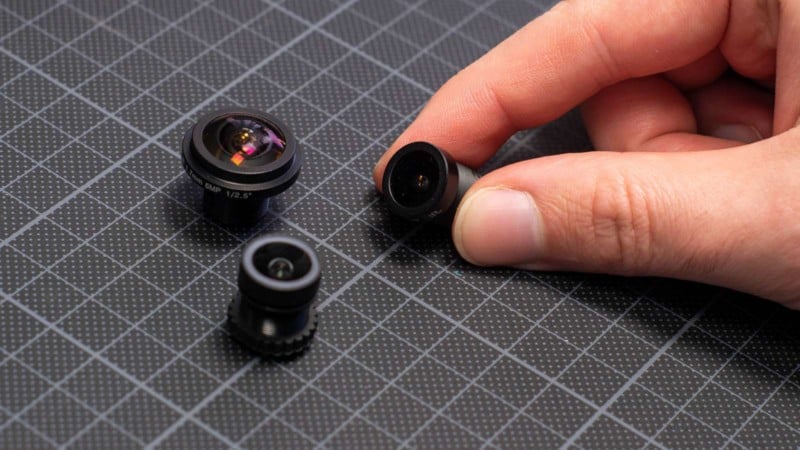
These are tiny lenses with a 12-millimeter screw thread. Y'all'll normally notice them on security cameras or machine vision stuff. They've got a fixed aperture, and for focussing, yous just screw it closer to the sensor or unscrew it. You oft won't know the bodily quality of the thing before yous buy information technology — there are very few standards and it'due south basically just a lot of… fun.
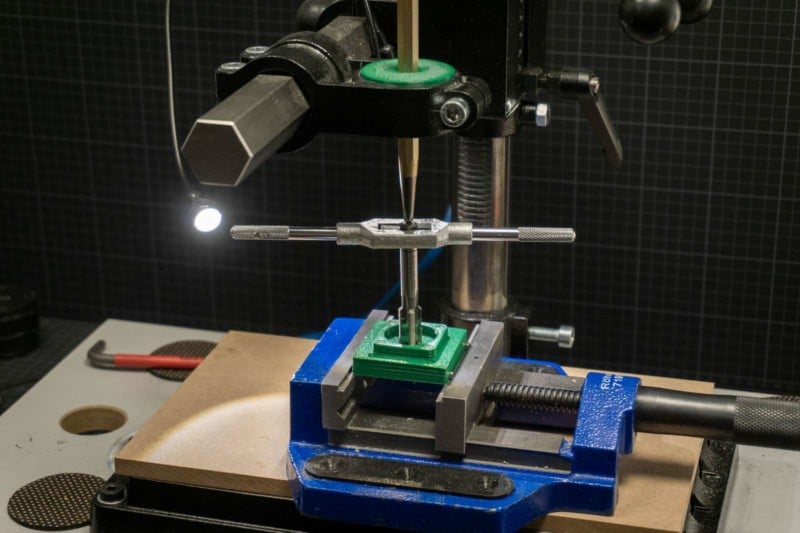
The correct thread for an M12 lens can be cut with an M12x0.75 thread cutter. I tried 3D-printing the thread (didn't work well), cutting it on a CNC with a single-tooth thread cutter (better, but quite a hassle) and finally spent the money to buy a dedicated manual thread cutter with the correct dimensions.
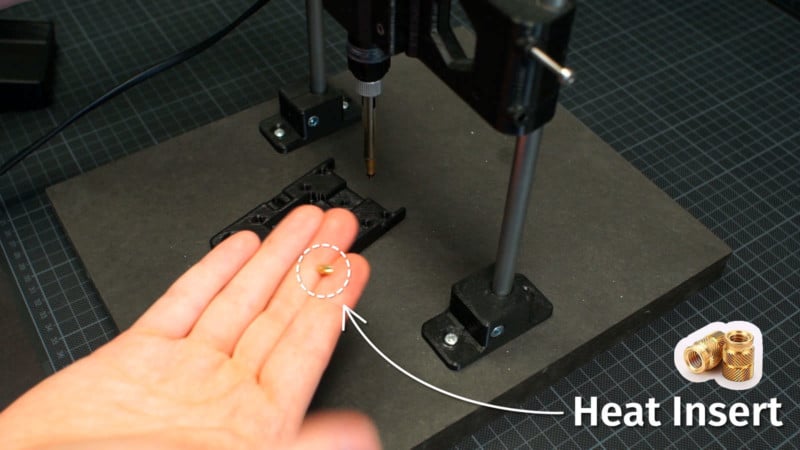
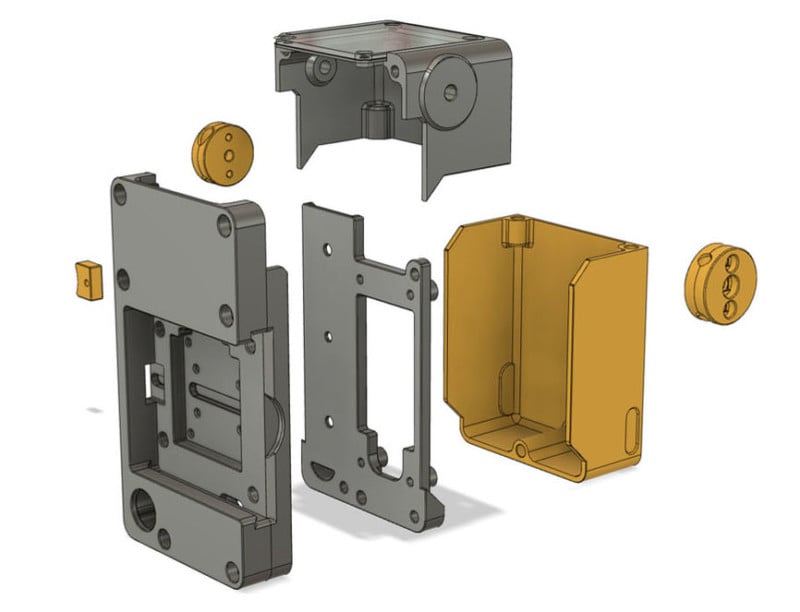
The whole trunk (except the walnut front end) is 3D printed and held together past screws, heat inserts, and magnets.
The lens mounts slide in place and are aligned by magnets too.
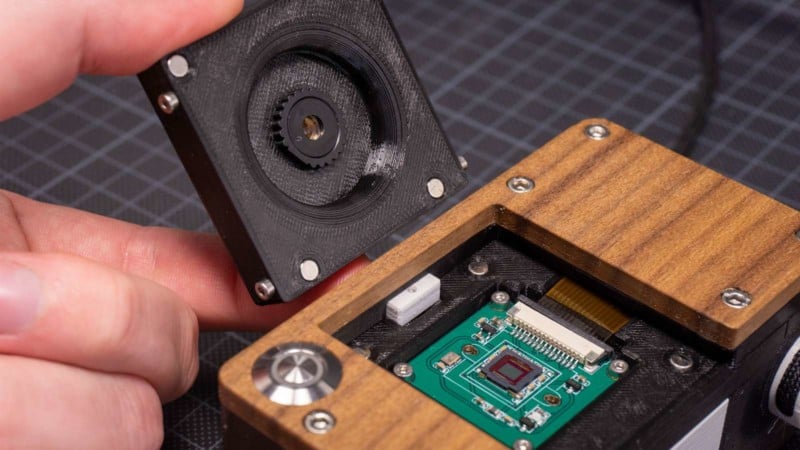
I made two versions since I am not sure which 1 I similar more:
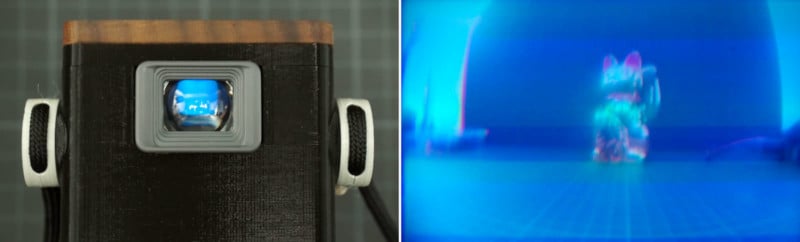
One uses a small electronic viewfinder usually found in nightvision goggles. It is driven by an analog video signal at 640×480 pixels.
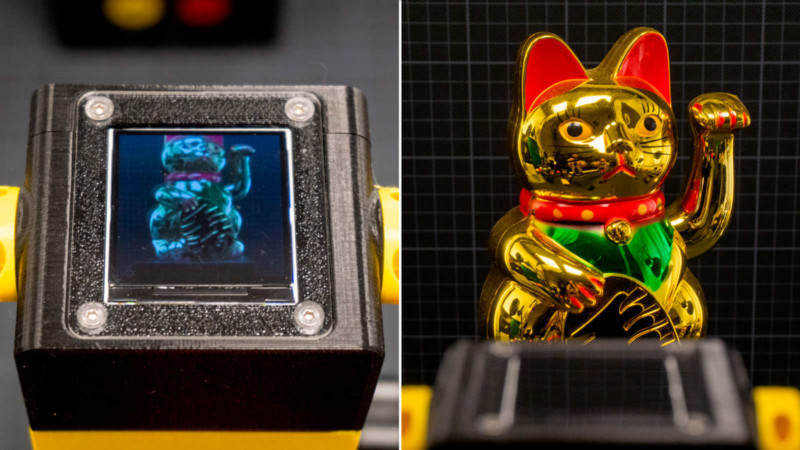
The other version is using a small 240×240-pixel square LCD display (ST7789) originally designed for low-end smartwatches.
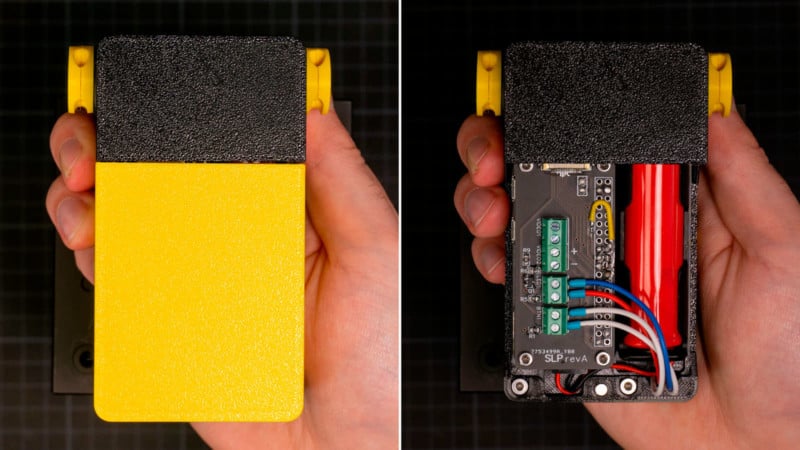
The whole thing runs on a Raspberry Pi Nothing and a 18650 battery. There is one dedicated power management board that provides 5V to the Pi and a 2d lath, sandwiched on top which holds the circuit for the button LED and the display/viewfinder connectors.
In instance you might be wondering most the pattern on the front: I was slightly annoyed by the flat surface and modified it with a Perlin noise design.
Lens Mounts
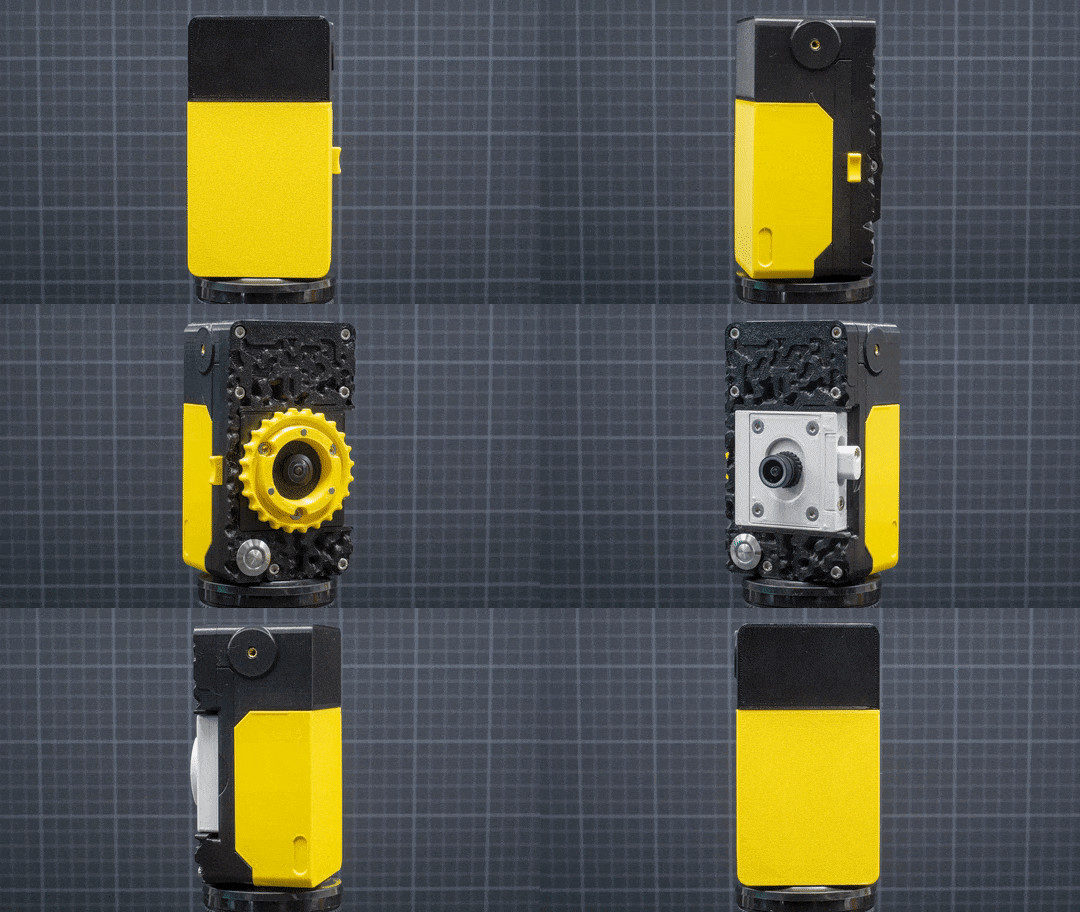
For the M12 lenses there are different lens mounts with different movement axes:
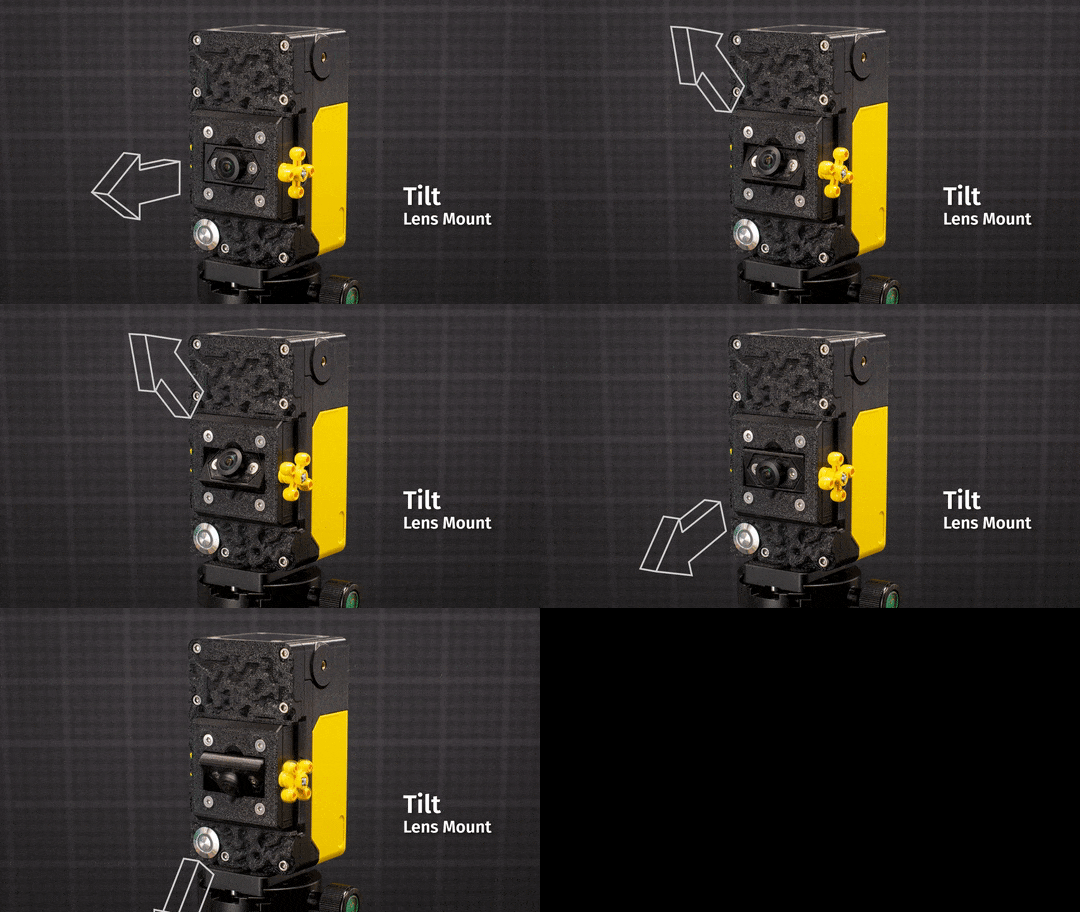
Tilt mount: allows to tilt the lens relative to the sensor. Peculiarly with longer lenses, this allows a scrap to play with images that are just partially in focus.
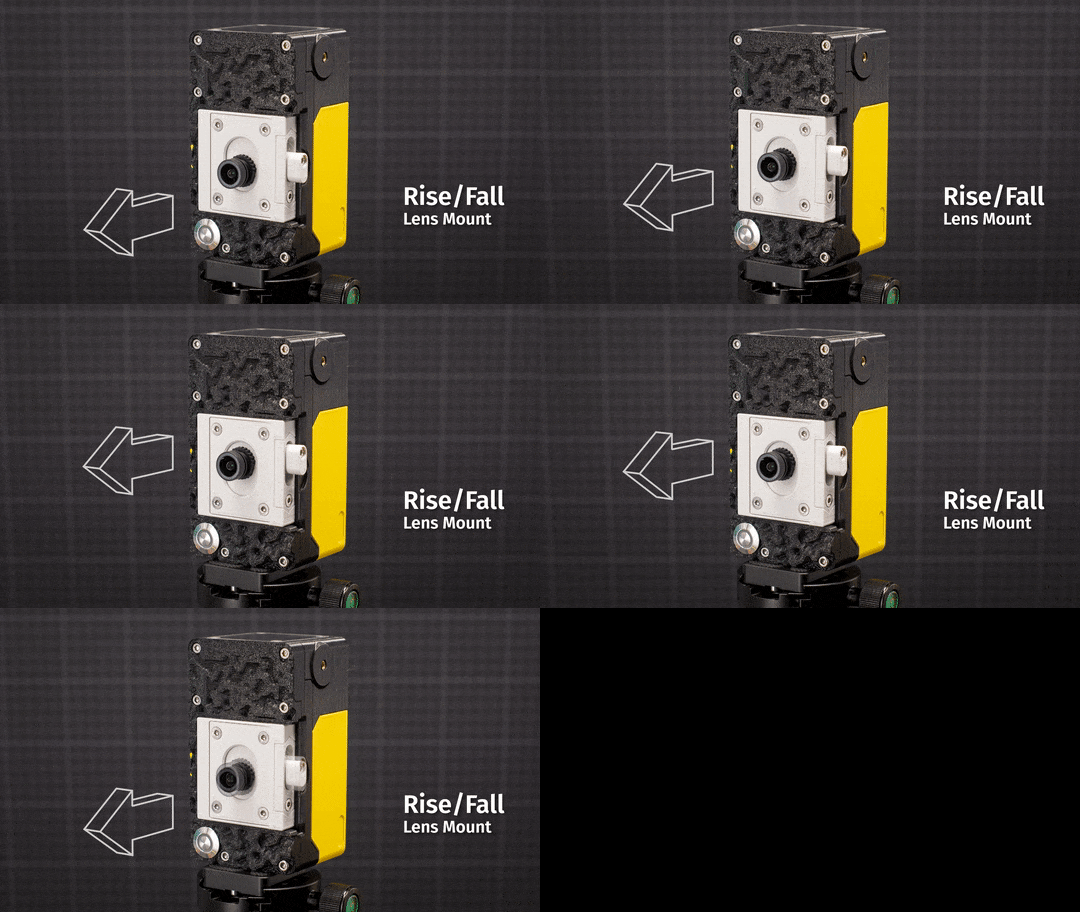
Rising/Fall mount: distorted angles on buildings? Want to have a strong vignetting effect? Ascension and fall gives upwardly to 10mm of travel to avoid distortions or move the lens out of the sharpest center region towards the edges of the epitome circle.
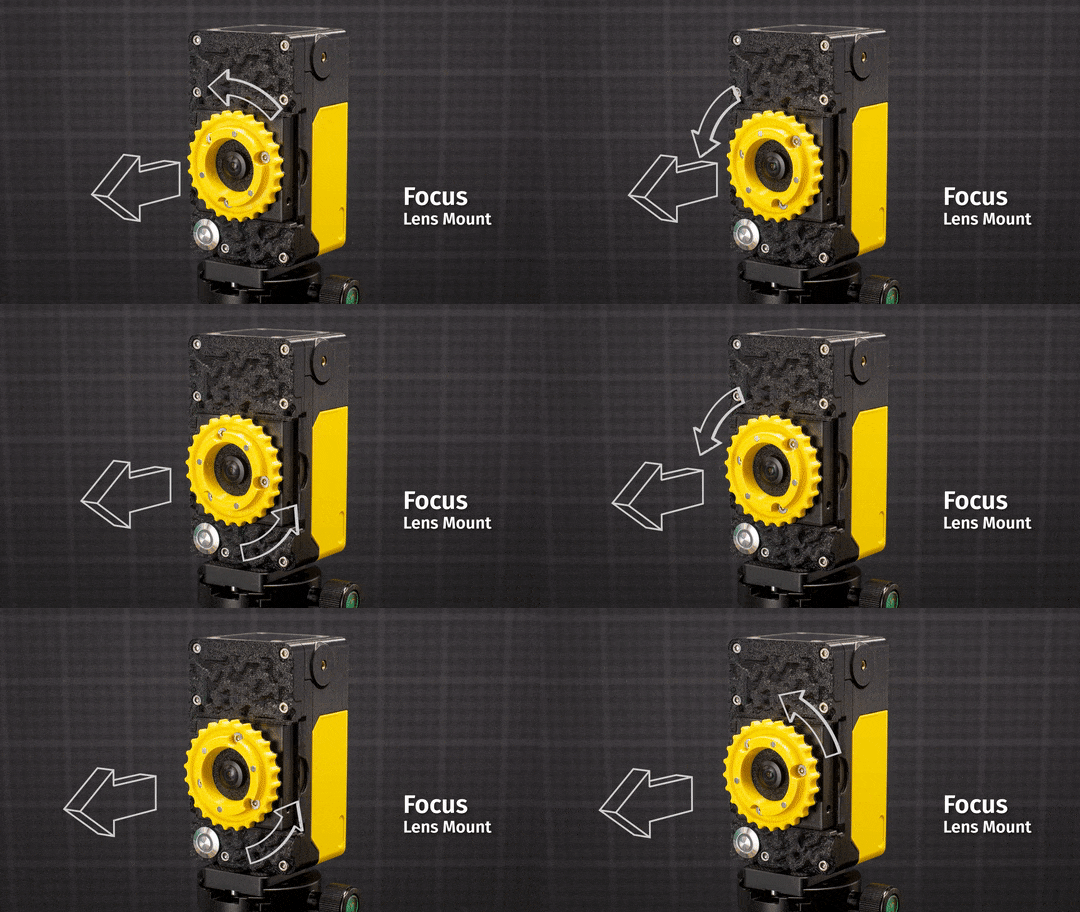
Focus mount: about of the wide-bending M12 lenses have a very large focal plane. So it's pretty easy to get most everything in focus when finding the hyperfocal bespeak. Nevertheless, being able to focus the lens is a pretty nifty feature, then nosotros've got a helical mount with a simple very low-pitch screw thread.
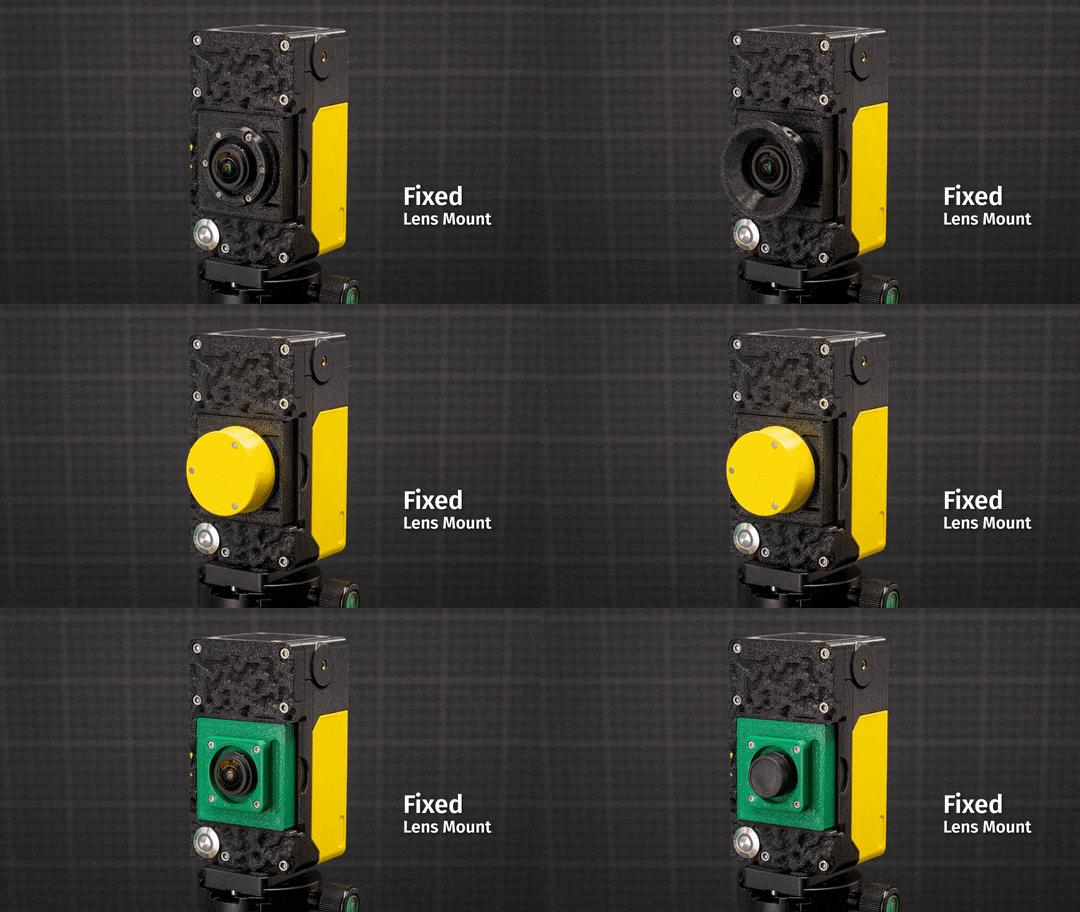
Stock-still standard mountain, generally suitable for the wide-angle lenses. Just a fixed mount without any motion. A lens cap or hood can exist fastened with magnets.
But Why Create a Digital Toy Camera?
Well, … why not? Why bring a large, fat camera to your vacation when all you would need is the tiny sensor on the phone in your pocket? But is information technology fun? Is it fun to pull out our phones and accept snapshots you seldom will wait at?
On the other hand, analog Lomography cameras are a lot of fun, but is information technology really cool to mix chemicals, develop motion-picture show and scan negatives for your vacation snapshots?
And then, kind of a tie here. The 3D-printable sh**ty plastic toy photographic camera is what fills this gap for me.
One More Thing
Because someone volition inevitably come up with "how about… two lenses, similar a classical Twin Lens Reflex camera?!". Yes, there is too a dual-lens version:
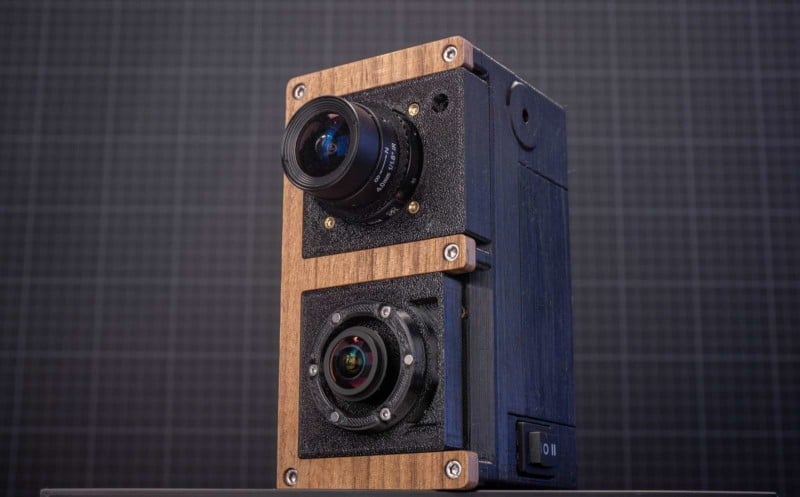
But that's slightly more clunky and less fun to handle. It runs on a Compute Module 4 to handle 2 cameras in parallel and is uniform with the 12MP Raspberry Pi HQ sensor likewise. So the proof-of-concept works, simply that'south non gonna come with me if I want to practice stupid stuff.
Downloads
The software and pattern files for this project are bachelor on GitHub for both the single-lens and the dual-lens version.
Nonetheless, in that location is little documentation, so this is more often than not suitable for people who would want to build something similar anyway.
Annotation: If you want to build this camera you will need to detect a power supply PCB that runs on a unmarried-cell LiPo bombardment. I am using my own, just due to global supply chain issues components are not available for anyone right at present. Other commercial products that might be available and volition piece of work: Adafruit PowerBoost 1000, Omzlo PiVoyager, uugear Witty Pi Mini.
About the author: Christopher Getschmann is a software guy, photographer, and tinkerer based in Weimar, Germany. The opinions expressed in this commodity are solely those of the author. Y'all tin find more of Getschmann's work on his website, Twitter, Flickr, and YouTube. This article was likewise published hither.
Source: https://petapixel.com/2022/04/20/how-i-built-a-digital-toy-camera/
Posted by: ravenusio1961.blogspot.com
0 Response to "How To Build A Digital Camera"
Post a Comment